
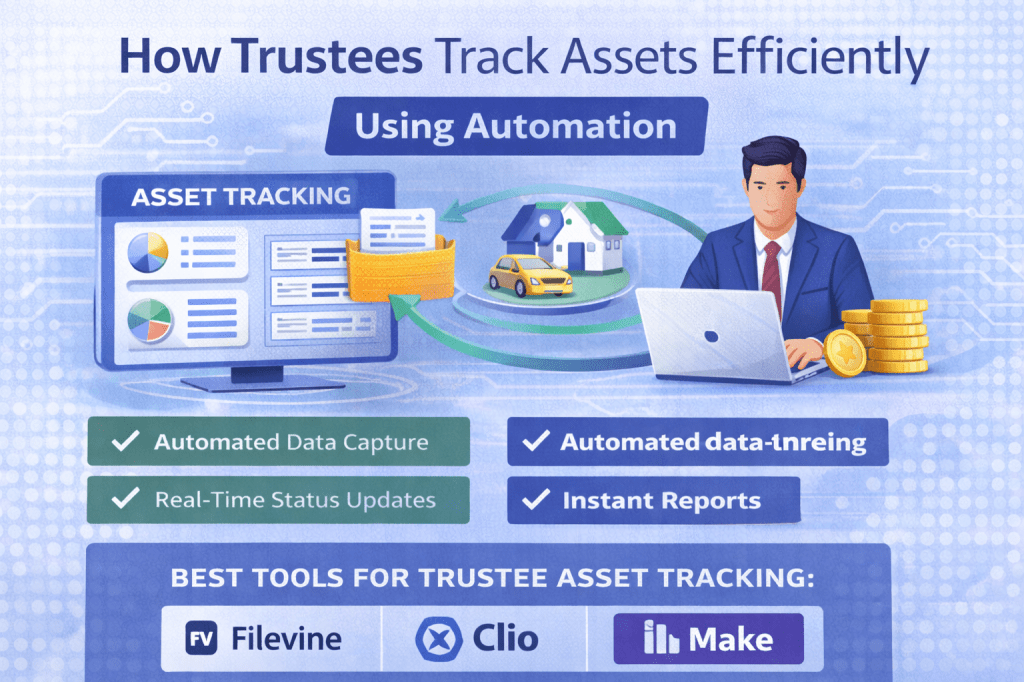
Tracking assets is one of the most critical—and time-consuming—responsibilities for Chapter 7 trustees. From identifying assets to monitoring their status and distribution, the process involves managing large amounts of data across multiple cases.
Without the right systems in place, asset tracking can quickly become inefficient and error-prone.
In this guide, we’ll show how bankruptcy trustees can use automation to track assets more efficiently, reduce manual work, and improve accuracy.
⚖️ Why Asset Tracking Matters for Trustees
Chapter 7 trustees are responsible for:
- Identifying debtor assets
- Determining asset value
- Managing liquidation
- Tracking distributions
- Ensuring compliance with reporting requirements
Even small inefficiencies can lead to:
- Missed assets
- Reporting errors
- Delays in case administration
- Increased administrative burden
Efficient asset tracking is essential for managing high case volumes.
🧠 The Problem with Manual Asset Tracking
Many trustees still rely on:
- Spreadsheets
- Manual data entry
- Disconnected systems
- Paper records
This approach leads to:
- Duplicate data entry
- Inconsistent records
- Limited visibility across cases
- Increased risk of human error
🤖 How Automation Improves Asset Tracking
Automation allows trustees to:
- Capture asset data automatically
- Centralize information in one system
- Track asset status in real time
- Generate reports instantly
- Trigger workflows based on asset changes
Instead of manually updating records, systems can update automatically based on actions and events.
🔄 Automated Asset Tracking Workflow
Here’s what an efficient, automated workflow looks like:
- Asset data is captured during intake or petition review
- Data is stored in a centralized system
- Assets are categorized and tagged automatically
- Status updates are tracked in real time
- Notifications are triggered when action is required
- Reports are generated automatically
This eliminates repetitive manual tracking.
🏆 Best Tools for Asset Tracking Automation
🥇 Filevine (Best Overall)
Filevine allows trustees to create custom fields and workflows to track assets across cases.
✅ Pros
- Centralized case and asset tracking
- Custom fields for asset details
- Workflow automation
- Real-time updates
- Scalable for high-volume workflows
❌ Cons
- Requires setup
- Not bankruptcy-specific
👉 Best For
Trustees who want a centralized, automated tracking system
🥈 Clio (Best for Simplicity)
Clio offers a more user-friendly system for tracking case data, including assets.
✅ Pros
- Easy to use
- Centralized case management
- Good integrations
- Quick setup
❌ Cons
- Less customizable
- Limited advanced automation
👉 Best For
Trustees who want simple, easy-to-use tracking tools
🥉 Make (Best for Advanced Automation)
Make connects systems and automates workflows across platforms.
✅ Pros
- Automates asset tracking workflows
- Syncs data across tools
- Highly flexible
- Reduces manual work
❌ Cons
- Learning curve
- Requires setup
👉 Best For
Trustees who want fully automated workflows across multiple tools
⚙️ Supporting Tools
Additional tools that can enhance asset tracking:
- Gavel → for generating asset-related documents
- Formstack → for collecting structured asset data
🔍 Key Features to Look For
When choosing asset tracking tools, look for:
- Custom data fields
- Real-time updates
- Workflow automation
- Integration with other systems
- Reporting capabilities
- Centralized data storage
📊 Example Use Case
A trustee managing multiple cases could:
- Capture asset data from intake forms
- Store data in a case management system
- Automatically categorize assets
- Track status (identified, liquidated, distributed)
- Generate reports instantly
- Receive alerts when action is needed
This eliminates the need for manual spreadsheets.
🚀 Benefits of Automated Asset Tracking
Automation helps trustees:
- Save time
- Reduce manual data entry
- Improve accuracy
- Standardize processes
- Increase visibility across cases
- Handle more cases efficiently
⚖️ Recommended Setup
For most trustees, the best setup includes:
- Case management → Filevine or Clio
- Automation → Make
- Document generation → Gavel
- Data collection → Formstack or Typeform
This creates a fully automated asset tracking system.
💡 Final Thoughts
Asset tracking is one of the most important—and repetitive—tasks for bankruptcy trustees. Because the process is structured, it is ideal for automation.
By implementing the right tools, trustees can reduce administrative work, improve accuracy, and manage more cases efficiently.
Even small improvements in asset tracking workflows can lead to significant time savings.
📌 Summary
Best overall: Filevine
Best for simplicity: Clio
Best for automation: Make
Overall: Automation is essential for efficient asset tracking
📌 Affiliate Disclosure
Some links on this page may be affiliate links. This means we may earn a commission if you sign up through these links at no additional cost to you.
We only recommend tools that are relevant for bankruptcy professionals and provide real value.


Leave a reply to Bankruptcy Trustee Workflow Automation (Complete Guide for Chapter 7 Trustees) – BankruptcyFlow AI Cancel reply